September 12th 2026, 5-7pm
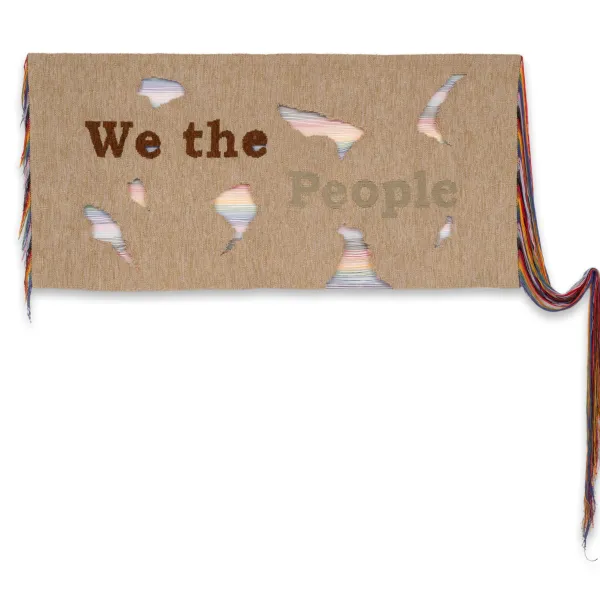
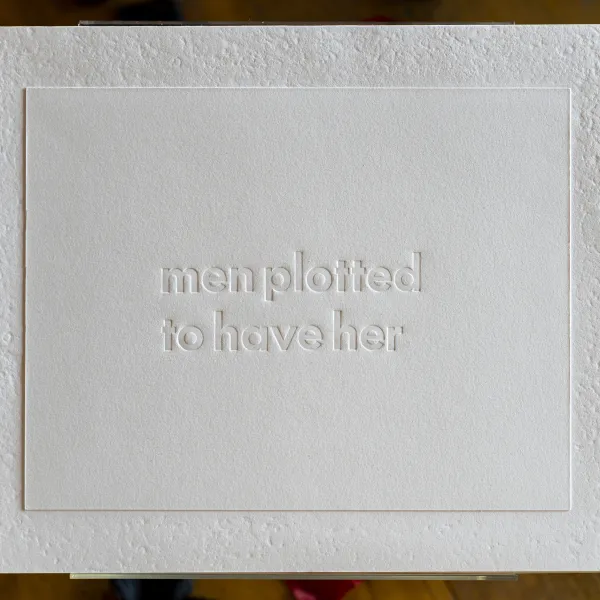
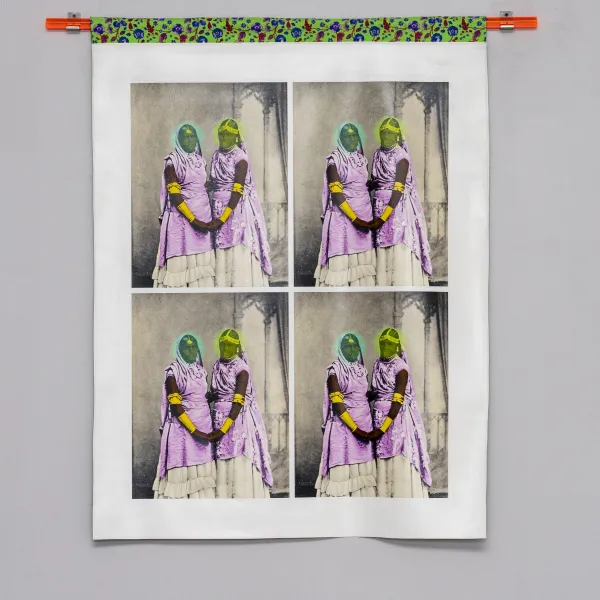
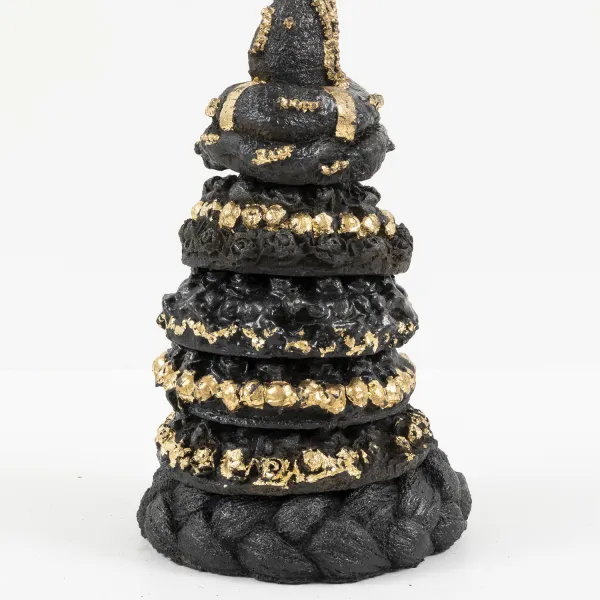
The Paglees are a feminist collective of artists of South Asian origin living across the United States. Paglee or pagli means crazy woman in a number of South Asian languages. In their exhibition, The Paglees investigate — with fierceness, beauty, and wit — the impact on women of generations of patriarchy, religion, white supremacy, colonialism, violence, capitalism, and environmental plunder.
The title of the exhibition derives from Rosa Parks’ words: “There is just so much hurt, disappointment, and oppression one can take. The bubble of life grows larger. The line between reason and madness grows thinner.”
The Paglees: Between Reason and Madness questions and reframes the labeling of non-conforming women as crazy and the marginalization of immigrant women of color. This collective exhibition presents new decolonial narratives that center the reason and wisdom of brown women of the Global South and diaspora, and provide pathways to a creative feminist future. The Paglees believe in working in collaboration with other marginalized communities to build bridges and demand social, environmental, and legal justice for all.
EXHIBITION EVENTS
Artist Talk with The Paglees Collective: September 12, 2026 5:30pm | Location: Catherine G Murphy Gallery
Join The Paglees Collective for an artist talk during the exhibition opening.
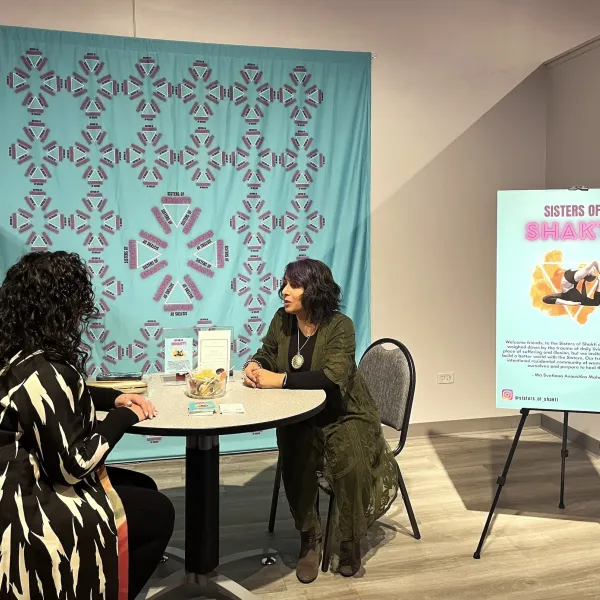
Performance- Sister of Shakti ; by Shelly Bahl: September 12, 2026 5-7pm | Location: Catherine G. Murphy Gallery
For Sisters of Shakti, Shelly Bahl has created visual renderings, promotional materials, and an interactive invisible theater performance for a speculative intentional residential community for women. This spiritual community, Sisters of Shakti, is led by the supreme Ma Svetlana Anoushka Mahashakti.
Through storytelling, Bahl is investigating the desire for building and participating in utopian communities and the reality of our very human destructive tendencies. In the performance component of Sisters of Shakti, the general public is invited to a recruitment booth where they can watch a promotional video, chant a mantra from a branded postcard, and participate in other rituals with a guide.
Shelly Bahl (she/her)
Instagram @shellybahl
Shelly Bahl is an interdisciplinary artist and decolonizing art trailblazer. She has been leading and participating in BIPOC and feminist artist-run culture in Toronto and NYC for over 30 years. She is a founding artist member of SAVAC (South Asian Visual Arts Centre) and ZEN-MIX 2000: Pan-Asian Visual Arts Network in Toronto. She spent her formative years in India and in Toronto, Canada, and is currently based in New York City. Bahl received her BFA (Visual Art and Art History) from York University, Toronto and her MA (Studio Art) from New York University. Her interdisciplinary artwork has been presented in many solo and group exhibitions in North America and internationally.
Bahl’s art practice explores the strange and surreal aspects of cultural hybridity and old and new forms of colonization. She is interested in the global transmission of iconographies and other forms of visual culture. She also investigates the surrealistic experiences of racialized women who have led enigmatic trans-cultural lives. These narratives are based in facts and fictions rooted in specific cultural histories, which she then re-contextualizes and re-imagines.
Bahl has participated in artist residencies with Rungh, Vancouver; Lahore Museum & Beaconhouse National University, Lahore, Pakistan; Center For Book Arts, NYC; BRIC, Brooklyn; Religare Arts Initiative, Delhi; Artists Alliance, NYC; Banff Centre For the Arts; Matucana 100, Santiago, Chile; Vermont Studio Center; and Sanskriti Kendra Foundation, Delhi.
Bahl has also worked with numerous arts organizations as a curator and educator. She recently curated, What Is Seen and Unseen: Mapping South Asian American Art in Chicago, a groundbreaking 125 year survey exhibition at the South Asia Institute. She has also lectured and taught courses in studio art, art theory and art history at various colleges and universities across North America.
Monica Jahan Bose (she/her)
monicajahanbose.com www.storytellingwithsaris.com
Instagram @mjbose @storywithsari
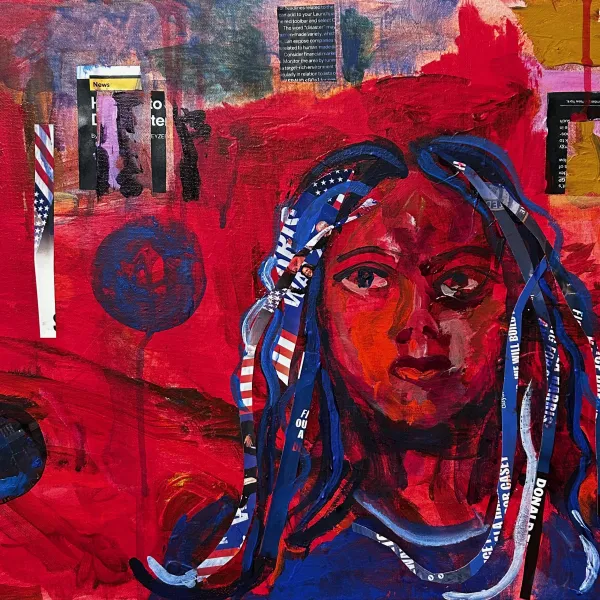
Monica Jahan Bose is a Bangladeshi-American artist and climate activist whose work spans painting, printmaking, film, performance, and installation. Her socially engaged work highlights the intersection of climate, racial, gender, and economic injustice through co-created workshops, art actions, and temporary installations and performances. Her series of paintings on elections and democracy includes the recent “Red and Blue” collage paintings made with Harris-Waltz flyers from the 2024 elections. She has exhibited her work extensively in the US and internationally including solo exhibitions at the Bangladesh National Museum and MACRO Museum of Contemporary Art Rome.
Her ongoing decade-long collaborative art and advocacy project STORYTELLING WITH SARIS with women farmers from her ancestral island village has traveled to eight countries and 12 US states, engaging thousands of people. Her work has appeared in the Miami Herald, the Washington Post, Art Asia Pacific, the Milwaukee Sentinel, the Honolulu Star Advertiser, the Japan Times, Prothom Alo and all major newspapers in Bangladesh. The Smithsonian Anacostia Community Museum has acquired a collection of her paintings, saris, woodblocks, and archival materials. Monica was an artist delegate to the COP28 climate conference in Dubai, presenting sari installations, workshops, and film screenings. She has a BA in the Practice of Art (Painting) from Wesleyan University, a post-graduate diploma in art from Santiniketan, and a JD from Columbia Law School.
Her decolonizing work speaks to women's bodies as sites of violence, pleasure, and resistance against patriarchy, Empire, and the exploitation of women and the environment. She uses the hand-woven cotton sari — a precolonial 18-foot-long unstitched garment that is always recycled and never discarded — to represent women’s bodies, lives, and sustainability. The saris contain writing and woodblock co-created with Bangladeshi women farmers and residents of North America and Europe. Water is also a recurring motif, representing life, climate, death, and renewal.
Fawzia Khan (she/her)
Instagram @fawziakhanart
Fawzia Khan is a multidisciplinary visual artist and curator based in Hopkins, Minnesota. Born in Lagos, Nigeria to Pakistani parents, she emigrated to the U.S. at the age of twelve. An obstetrician/gynecologist, she gave up her medical practice after giving birth to become a mother and housewife and eventually returned to school to study art. She holds a BA and MD from the University of Missouri and a BFA from the University of Minnesota.
Khan is an active member of two national multiethnic artist collectives, the Habibtis and the Paglees, and the Interfaith Artists Circle in the Twin Cities. She has juried the Minnesota State Fair Arts Competition and helped develop a public art program in Hopkins, MN.
Khan received Minnesota State Arts Board grants in 2020 and 2024, was a 2022 and 2025 McKnight Fiber Artist Fellowship finalist and a 2026 McKnight Visual Arts Fellowship finalist. Her work is included in many private collections as well as the collections of the North Dakota Museum of Art, The Warehouse, Milwaukee, WI, the City of Hopkins, MN, the Donald M. Fraser Early Childhood Development Center, Minneapolis, MN, the Robert J. Jones Urban Research and Outreach-Engagement Center, Minneapolis, MN, and the Loppet Foundation, Minneapolis, MN. She is one of the featured artists on the Twin Cities Public Television program MNOriginal and is a current member of Form + Content Gallery in Minneapolis.
Khan’s identity and lived experience inform the themes she focuses on, particularly religion, humanism, feminism, and motherhood. Her work is best described as social commentary calling out inconsistencies in human interactions, traditions, and belief systems in a search to encourage compassion, empathy, and acceptance with both logic and aesthetic seduction.
Renluka Maharaj (she/they)
Instagram @renlukamaharaj
Renluka Maharaj was born in Trinidad and Tobago and works between Colorado, New York City and Trinidad. She attended the University of Colorado, Boulder where she earned her BFA , and her MFA at The School Of The Art Institute of Chicago. She has received numerous awards including Martha Kate Thomas Fund, the Presidential Scholarship at Anderson Ranch Center and the Barbara De Genevieve Scholarship. Her works are in institutional collections including The Art Institute of Chicago, Museum of Contemporary Photography in Chicago, Joan Flasch artist book collection, Los Angeles Center for Digital Art, Flaten Museum, Bank of America, Special Collections at the University of Colorado, Boulder as well as numerous private collections. Her work has been recognized through various fellowships and residencies including Project For Empty Space, Golden Arts Foundation, Fountainhead Residency, Vermont Studio Center to name a few. Her work has also appeared most recently in Washington Post, Elle India, Harper's Bazaar India, New American Paintings, Coolitude Volume II, Juxtapoz and Hyperallergic.
The artist’s family history has been a point of departure for her ongoing dialogue and research. Her work is autobiographical, influenced by the narratives, myths and folklore born from the women who migrated from India to the Caribbean.
Renluka Maharaj’s maternal grandparents arrived in Trinidad and Tobago in 1913 as indentured servants under the British to work on the sugar plantations. Indians were the new labor source as slavery had been abolished, though the conditions they lived and worked under were very similar. Maharaj says: “It is a history of people that have been violated, enslaved, othered, killed, and raped to uphold a system of capitalism. Growing up as a girl was challenging and I did not live up to the roles I saw other Indian women exhibit, one of subjugation.” Her work addresses the complexities of identity and existence in a post-colonial world. She showcases the beauty, strength, love, magic, power, and diversity of a people that persist, not perfectly but with grace and intention.
Indrani Nayar-Gall (she/her)
Instagram @indraninayargall
A multidisciplinary feminist artist, Indrani Nayar-Gall weaves global narratives of marginalization, patriarchy, and misogyny. Through artivist practices at the intersection of installation, 2-D and
3-D media, moving image, and community engagement, she explores past and present histories of erasure. Social justice themes stem from her experience of growing up in India as a child of mixed north-south Indian backgrounds, her life in the Caribbean and the U.S. with her interracial family. In a career spanning over thirty-five years including teaching at BFA programs and directing two documentaries, she continually expands her studio practice.
Indrani holds an MFA in experimental printmaking from Visva-Bharati University in India, a Dip.Ed. from the University of the West Indies in Barbados, and a Graduate Certificate in Contemporary Non-Toxic Printmaking from Rochester Institute of Technology, where she studied under pioneering researcher Professor Keith Howard. She exhibits regionally, nationally, and internationally, and is the founder of Yes She Rises LLC. Her major awards and grants include a Creative Renewal Fellowship from the Arts & Science Council of Charlotte-Mecklenburg, a fully funded Virginia Center for the Creative Arts Fellowship, a Khoj Residency in Kolkata, the Chancellor’s Diversity Challenge Fund from UNC Charlotte, and the Gilmore Emerging Artist Grant from the Arts Council of Greater Kalamazoo. Her work is held in significant public and private collections, including the National Art Collection of Barbados.
Nayar-Gall’s non-conformist work is inspired by women-made culture and ritual. Exposure to European art shaped her tools and language, while also creating an urgency to decolonize her imagination. She stretches the limits of conventional processes to create bodies of work that physically hang, extend across floors or walls, or unfold through non-linear digital moving-image narratives. Indrani’s present work addresses generational violence against marginalized bodies and minds, as well as their dreams, aspirations, resilience, and upstream struggle against patriarchal currents.
Nirmal Raja (she/her)
Instagram @nirmal.raja
Nirmal Raja is an interdisciplinary artist who lives in Cambridge, Massachusetts. She had lived in India, South Korea, and Hong Kong before immigrating to the United States thirty years ago. She holds a BA in English Literature from St. Francis College in Hyderabad, India; a BFA from the Milwaukee Institute of Art and Design, and an MFA from the University of Wisconsin Milwaukee. She has participated in solo and group shows in the Midwest, nationally, and internationally.
She has received several awards including “Graduate of The Decade” from the University of Wisconsin, Milwaukee. Raja received the Mary L. Nohl Fellowship for individual artists for 2020 and the Mildred L. Harpole Artists of the Year 2022 award from the Milwaukee Arts Board. Her art residencies include the Arts/Industry Residency at Kohler WI, MASS MoCA, Vermont Studio Center among others. She is a member of the Boston Sculptors Gallery. She collaborates with other artists and strongly believes in investing energy into her immediate community while considering the global. She periodically curates exhibitions that bring people from different cultures and backgrounds together.
At the core of her practice is a compelling refusal to be defined by others. Her work rotates between deeply personal investigations and socially responsive crowd sourced projects. The impact of migration on women is of immense interest to her, especially how material culture is a witness and testament to these experiences. At the same time, she processes current political and social events by making responsive and generative work.
Pallavi Sharma (she/her)
Instagram @write_pallavisharma
Pallavi Sharma is a multidisciplinary artist and independent curator. Her socially engaged art practice addresses migration and notions of memory, marginalization, and patriarchy. Her practice and research interests concern Asian American women’s cultural production and activism. She received her BFA and MFA from the Faculty of Fine Arts Baroda and a Ph.D. in Art History from the National Museum Institute of History of Art, Museology, and Conservation in New Delhi, India. She is the founder and director of Inner Eye Arts and served on the Asian American Women’s Artist Association (AAWAA) board from 2009 to 2021. Her recent publications include two poetry collections in Hindi, Kacha Rang (2018) and Koltar ke Paer (2022). Pallavi teaches in the Critical Ethnic Studies program at California College of the Arts, San Francisco.
Her work centers around the intersectionality of gender, caste, class, and environmental justice and speaks about our bodies, environment, and cultural history to reclaim spaces and redo systems that destroy communities. Sharma derives strength from many philosophers and activists who have generated the power to speak against all kinds of oppression and have enabled us to see the broader and deeper divide which separates us. Through contrapuntal readings of selected Indian mythological texts, lullabies, and ritual practices, her work offers imaginary ways to alter the prescriptive texts and create liberatory spaces, new ways of knowing, connecting, and understanding each other. Sharma says: “To me, contrapuntal means an alternative reading and a reading that goes against the grain. I needed to unlearn the myths that I was taught. I am trying to unpack and rewrite the gendered, classist, and racist mythology. The villain is always dark-skinned. Even goddesses are usually consorts to the more powerful male gods.”
Image Gallery
Click an image to view in larger size